


 5807
5807 8
8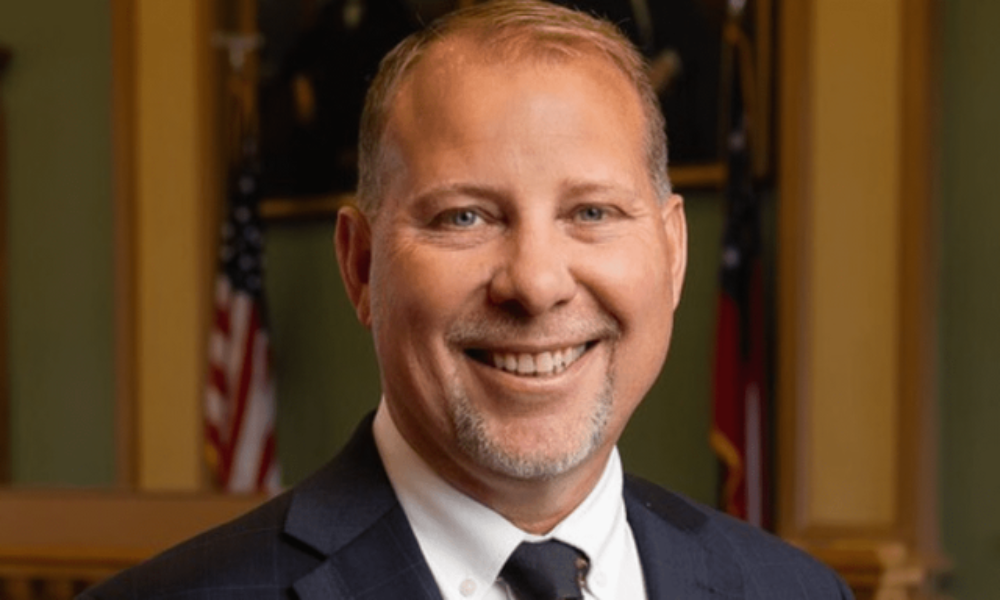
Three months after casting one of the deciding votes to approve the controversial Project Sail data center, Coweta County Commissioner Jeff Fisher invited The Citizen into his 1861 Senoia home to explain why.
Surrounded by the craftsmanship of a house he and his wife, Stacy, painstakingly restored—including a spacious kitchen anchored by a fireplace mantel that once belonged to Stacy’s mother—Fisher spent more than two hours answering questions about the vote that has generated petitions, lawsuits and months of public debate.
The April 10 decision approving the approximately 829-acre rezoning passed 3-2 after months of packed meetings and emotional public testimony. Since then, residents have sued to overturn the approval, while opponents have continued challenging the project’s projected tax revenue, environmental impacts and compatibility with Coweta County’s rural character.
Fisher knows many residents disagree with his vote.
Who is Jeff Fisher? Before entering local government, Fisher spent nearly 36 years in national security and public service. He served more than 11 years in the U.S. Army, including assignments with the White House Communications Agency supporting secure communications for the President, Vice President and other senior government officials around the world. He then spent 24 years with the FBI as an electronic technician, supporting secure communications, crisis response, research and development, and the handling of classified equipment and materials.
After retiring from the FBI in 2022, Fisher joined the City of Senoia as assistant city manager while continuing a local government career that already included 11 years as a city council member and mayor. He was elected to the Coweta County Commission in 2024.
Those experiences, Fisher said throughout the interview, influence the way he evaluates projects like Project Sail. While many residents see a local zoning case, he said he often views decisions through the lenses of infrastructure, long-term planning and national security.
He said he welcomed the opportunity to explain the reasoning behind one of the most controversial decisions of his time in office. Fisher also provided The Citizen with a written explanation of his vote and the tax-revenue calculations he said informed his decision.
Can an elected official vote against 8,000 people?
It is one of the central questions surrounding Project Sail.
More than 8,000 people signed a petition opposing the proposed data center. Hundreds attended public meetings urging commissioners to reject the rezoning, arguing the project threatened the county’s rural character, strained natural resources and conflicted with Coweta’s long-term vision.
During the interview, Fisher was asked whether approving the project despite that level of opposition amounted to ignoring the public.
His answer was no.
Fisher said residents are right to remind commissioners that they work for the people.
“‘You work for us.’ It’s 100% correct,” he said, repeating a phrase he frequently hears from constituents.
But he said listening to constituents and following their wishes are not always the same thing.
Commissioners, he said, are elected to study complicated issues, weigh competing evidence and make decisions they believe will best serve the county—even when those decisions are unpopular.
“I have looked at the material,” Fisher said. “I’m supposed to be looking at material in an unbiased manner. I’m supposed to be putting the county into the best financial position… and those decisions that I have made, I would still believe and embrace.”
Fisher said elections are how voters hold elected officials accountable, but he does not believe the possibility of losing office should determine how commissioners vote.
“Your vote is important to me,” he said. “Your voice at the podium and through emails is even more important to me. But you’re not going to hold that vote hostage for a decision that’s made.”
Fisher acknowledged the size of the petition but said numbers alone cannot determine the outcome of a zoning decision.
“What happens if all 8,000 of those people are incorrect?” he asked.
He said a commissioner who simply follows the largest crowd despite believing the decision is wrong is putting political survival ahead of public service.
“I know this may be wrong, but I want to get re-elected,” Fisher said, describing the decision mindset he rejects. “I’m not doing that. I will never do that.”
Instead, Fisher said decisions should rise or fall on the strength of the evidence—not the number of people making the argument.
“Give me one single person out there that has a better argument, a better case, better footing, and I will go with that one single person versus everybody else.”
Whether readers agree with that philosophy or not, it explains why Fisher never viewed public opposition by itself as a sufficient reason to reject Project Sail.
His job, he said, was not to conduct a referendum.
It was to exercise judgment.
Why did revenue matter more than anything else?
Asked what ultimately convinced him to support Project Sail, Fisher answered without hesitation.
“The number one thing was revenue,” he said. “Number one.”
For Fisher, the financial question came before every other argument.
Before weighing whether the site made sense, before comparing data centers with residential development, and before considering the political fallout, he wanted to know whether a project of this scale could substantially change Coweta County’s long-term financial position.
He said he began comparing Project Sail with other proposed data centers, researching tax structures, speaking with developers, reviewing revenue projections and contacting officials in jurisdictions where similar facilities have operated.
“I took a Project Sail, Project Oak, and put them side by side,” Fisher said. “I built that revenue stream for 30 years. It’s a massive amount of money.”
According to calculations Fisher shared during the interview, he estimates Project Sail could eventually generate more than $100 million annually in combined county and school property tax revenue once fully built and assessed. Those estimates are based on his assumptions about the project’s eventual assessed value and current millage rates.
For Fisher, those numbers represented more than a successful economic development project.
They represented a way to pay for the roads, public safety, schools and infrastructure residents say they want—without relying solely on additional residential growth or higher property taxes.
Why a data center instead of more houses?
Fisher said he understands why residents want to preserve rural Coweta County. He also said that desire runs into a difficult reality: much of the land residents want protected is privately owned.
To Fisher, the choice before commissioners was not whether the Project Sail property would remain untouched forever. It was whether the county would approve a data center or risk some other form of development on the same land.
“They want to keep it rural,” Fisher said. “We don’t need to rezone it. They want to put x amount of houses on there.”
Fisher said the Project Sail property had previously been discussed for residential development, with hundreds of homes possible on the site.
“I’d rather have a building than homes,” Fisher said. “I’m sorry. I would much rather have a building of that nature, where you couldn’t see it, rather than 585 homes priced between $500,000 and $700,000.”
That comparison is central to Fisher’s argument.
Residential growth, he said, brings new demands for roads, schools, deputies, firefighters, EMS, parks, water, sewer, and other services. Industrial development, by contrast, can produce more tax revenue while requiring fewer services.
For Fisher, that matters because residents are also asking commissioners to slow residential growth and stop raising taxes.
“Residential growth, for every house that comes in, for every $1 that we get in revenue in a government, we actually spend $1.16 in services,” Fisher said. “Data center is quite different.”
Fisher said he would rather see Coweta County use large-scale industrial tax revenue to help pay for infrastructure and public safety than continue depending on residential construction to expand the tax base.
“What is the primary problem that we currently have?” Fisher said. “And that’s residential growth.”
Property rights and rural views
Fisher’s support for Project Sail also rests on a second argument: property rights.
He said residents often speak passionately about preserving trees, wildlife, views, and open space. He does not dismiss those concerns, but he believes they become more complicated when the land belongs to someone else.
“You cannot use other people’s property as your form of serenity,” Fisher said.
He described a previous residential zoning dispute in Sharpsburg, where nearby residents told commissioners they enjoyed looking out at undeveloped land from their porches.
“I said, but it’s not your property,” Fisher said. “You have three subdivisions that surround this piece of property. Why don’t all of you get together and buy that land if it is so valuable to you?”
Fisher said many landowners have held property for decades with the expectation that it may one day provide financial security for their families. In that sense, he compared land to a retirement account.
“Not everybody has a 401(k),” Fisher said. “This man that has asked to sell this property, that is his 401(k). He’s held this property for over 30 years. His family has owned this. They have waited for this period of time. He wants to cash out.”
Fisher said government should be cautious about preventing landowners from realizing the value of their property simply because surrounding residents prefer the land remain undeveloped.
“People have property rights,” Fisher said. “They have a right to develop something on that property.”
That does not mean, he said, that every proposal should be approved. Commissioners still have to evaluate location, compatibility, infrastructure, conditions, and impact.
But Fisher said the burden cannot be placed entirely on a landowner to preserve the character of land the public does not own.
“Either buy the property,” Fisher said, “or let this man cash out on his 401(k) and go where he wants to go.”
Can Coweta preserve rural land another way?
Fisher said he does believe Coweta County should preserve more land.
But he argues that preservation requires money, planning, and a formal program—not just votes against development applications.
“There are no programs for conservation,” Fisher said. “There are no programs for revitalization of an area like that.”
In his view, large-scale tax revenue from data centers could give the county the financial ability to create those programs.
He said the county could eventually buy land, reforest cleared property, create soft-trail parks, support conservation corridors, and use public-private partnerships to revitalize areas that have been neglected.
“We can go out there and buy these properties as a county,” Fisher said. “We have the ability to reforest them. We can put parks on there that are soft trails, not anything hardscape.”
Fisher said without new revenue, conservation risks becoming “lip service.”
“If we truly want to get on board with that and have a program that’s not just lip service to the public, that’s going to take tens of millions of dollars every year,” Fisher said.
He said that is part of why he sees Project Sail as what he called “a half step back and go three forward.”
In other words, Fisher believes approving some industrial development now could eventually give Coweta County the money to protect more land later.
Opponents are unlikely to accept that tradeoff. Many have argued that once rural land is industrialized, the character of that place is permanently changed.
Fisher does not dispute that Project Sail would change the site.
He disputes the idea that rejecting it would automatically preserve rural Coweta.
Did Project Sail fit the Comprehensive Plan?
One of the recurring objections to Project Sail was that the land was designated Rural Conservation in Coweta County’s Comprehensive Plan.
Opponents argued the rezoning to industrial use conflicted with the county’s own planning documents and set a dangerous precedent for future development.
Fisher said the existing Comprehensive Plan did not anticipate data centers as a land-use category.
“The conservation plan that we’re currently under now never took data centers into consideration,” Fisher said. “The current plan that we’re getting ready to adopt does.”
He said the scale of a data center places it in an industrial or light industrial category, even though some functions resemble an office use.
“The use is actually for your office area, but the sheer scale of those things puts you in the light industrial, industrial area,” Fisher said. “It’s the size.”
Fisher also pointed to the site’s proximity to Plant Yates, existing industrial and commercial uses, rail access, and nearby properties he described as blighted or underused.
Project Sail opponents have argued that the site only narrowly connects to an employment center and that the rezoning stretches the intent of the Comprehensive Plan.
Asked about that criticism, Fisher said the project met the requirement.
“You have to abut the property,” Fisher said. “You got the employment center.”
Asked whether he believed Project Sail still fit, he answered directly.
“Project Sail does,” Fisher said. “Absolutely.”
Was this the best possible location?
Fisher acknowledged that Project Sail’s location was one of the hardest parts of the decision.
He said he initially questioned whether the site was appropriate and did not begin the process as a supporter.
“For about the first six months, I wasn’t going to go for it,” Fisher said.
That changed, he said, after he visited the area and looked more closely at the surrounding land uses, including Plant Yates, abandoned textile properties, rail access, and nearby industrial or commercial development.
He said he also considered what might happen if the project were denied.
Atlas and Prologis, he said, had other options. But commissioners still had to decide whether this specific location could support the use.
“I may be able to go with you on this,” Fisher said of the criticism. “May not be the best place to put this. Would it be perfect in an industrial area? No.”
Still, he said he believed opponents were increasingly objecting not only to the location of Project Sail, but to data centers more broadly.
“I think the determination came for me personally that this group was going to fight us, even in the industrial areas, as well, and that we were going to miss this form of revenue,” Fisher said.
For Fisher, the location was not perfect.
But he said the larger question became whether the county could afford to reject a project he believed would generate substantial revenue, reduce pressure for residential growth, and give Coweta more options in the future.
Answering the toughest criticisms
Fisher said he understands why many residents remain opposed to Project Sail.
“If I lived beside it,” he said, “I’d probably be asking the same questions.”
Throughout months of public hearings, residents questioned whether data centers would lower nearby property values, consume too much water, create excessive noise, strain infrastructure, and fundamentally alter Coweta County’s rural character.
Fisher said those concerns prompted months of research on his part.
He contacted commissioners in Loudoun County, Virginia, where data centers have operated for decades. He asked developers for revenue histories from comparable campuses. He visited proposed sites, reviewed environmental information, and repeatedly challenged developers to substantiate the projections they presented.
He said he also challenged opponents to provide evidence supporting some of their claims.
One example involved property values.
“I said, ‘Show me a study that conclusively states that it lowers property values,'” Fisher said. “I’m saying I’m not seeing that.”
That does not mean, he said, that every concern lacks merit.
Fisher said future data centers should be strategically located, heavily buffered, and subject to stricter standards than earlier generations of facilities.
He pointed to Loudoun County as an example.
Officials there told him they regretted allowing data centers to be built too broadly across the county rather than concentrating them in carefully selected areas.
That conversation reinforced Fisher’s belief that Coweta County should regulate future projects carefully rather than reject the industry altogether.
“We’re looking into all of those things,” he said, referring to concerns about noise, setbacks, and environmental protections.
Why he believes misinformation is winning
Fisher believes one reason the debate has become so polarized is that many residents are receiving conflicting information about what modern data centers actually are.
He said he has repeatedly challenged developers to do a better job educating the public.
“I’ve jumped on Atlas, I’ve jumped on Prologis, I’ve jumped on Headwater,” Fisher said. “You guys are losing the PR war.”
At the same time, he believes opponents have successfully framed data centers as dangerous industrial facilities before many residents had an opportunity to learn how they operate.
“People are scared,” Fisher said.
He cited claims involving radiation, pollution, excessive water consumption, and low-frequency noise as examples of issues he believes require careful evaluation rather than assumptions.
Fisher said if definitive scientific evidence showed modern data centers contaminated drinking water or created significant health hazards, his position would change.
“If they came out with definitive proof that this was contaminating water, that this was truly polluting the air in the manner they’re speaking, then this would be a completely different thing,” he said. “If this were harming people, then there’s no possible way that I could allow that to go through.”
Looking beyond Coweta County
Throughout the interview, Fisher repeatedly expanded the conversation beyond zoning maps and tax revenue.
Fisher said his experiences in the Army and FBI cause him to view artificial intelligence infrastructure through a national security lens.
He believes the debate surrounding data centers is no longer simply about local land use. Instead, he argues it has become part of an international competition over artificial intelligence, computing capacity, and technological leadership.
During the interview, Fisher pointed to comments made by investor Kevin O’Leary, who has publicly argued that organizations with foreign ties have helped finance opposition to data center development in the United States through nonprofit groups. After reviewing information O’Leary referenced, including IRS Form 990 filings, Fisher said he believes some misinformation surrounding data centers has been amplified because slowing the construction of American AI infrastructure benefits geopolitical competitors, particularly China.
“We are in World War III with them right now,” Fisher said.
Fisher was quick to distinguish between residents who have sincere concerns about projects such as Project Sail and what he believes are larger information campaigns intended to shape public opinion.
He said local residents have every right to question projects proposed in their communities. But he also believes many alarming claims circulating online about data centers deserve careful scrutiny because, in his view, they can serve a broader strategic purpose if they discourage the United States from building the infrastructure needed to compete in artificial intelligence.
Even so, Fisher said his national security concerns would never override public safety.
“If this were harming people,” he said, “there’s no possible way that I could allow that to go through.”
For Fisher, Project Sail ultimately sits at the intersection of two issues: what is best for Coweta County today, and what he believes will matter to America’s technological future tomorrow.
What happens next
The lawsuit challenging Project Sail remains pending, and Coweta County has since adopted a temporary moratorium on additional data center applications while officials develop more detailed regulations governing future proposals.
Fisher supported the moratorium but acknowledged mixed feelings about it, saying he worried it could send the wrong message to the public if interpreted as a reversal of the county’s earlier decisions.
Instead, he said, the goal is to establish clear standards before considering additional applications.
As for Project Sail, Fisher said nothing he has learned since the April vote has changed his conclusion.
Asked whether he would cast the same vote again, he answered without hesitation.
“Absolutely.”
Whether Project Sail ultimately delivers the benefits Fisher expects will take years to answer. The lawsuit continues, and the county’s policies on future data centers are still evolving.
Fisher knows many residents remain convinced he made the wrong decision.
He believes history will judge it differently.






Leave a Comment
You must be logged in to post a comment.