


 4292
4292 0
0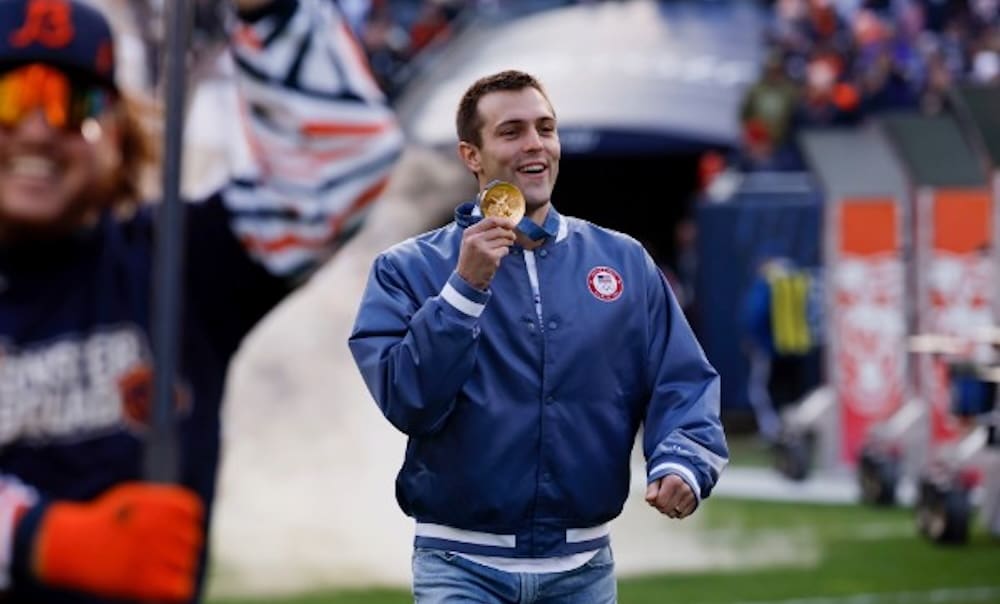
When Olympian Ryan Held stood behind the starting blocks at the Paris Games in 2024, the stakes could not have been higher. He had already tasted Olympic glory in Rio eight years earlier, but he had also endured disappointment—failing to make the U.S. team in 2021. At 28 years old, he knew he was racing against both time and doubt.
Physically, Held was ready. Years of training had sculpted him into one of the fastest freestyle swimmers in the world. But as he looked out at the pool, he realized the battle he was about to fight wasn’t only in the water. It was in his mind.
“I realized I needed help on the mental side,” Held said. “Some meets, I was on top of the world. Other meets, I hated swimming. Dr. Wood taught me how to filter out the noise and focus on the truth.”
That shift—learning to quiet the emotional swings and find balance—was the difference. “The 2016 medal was the physical swimming medal,” he said. “The 2024 medal was the mental and emotional medal.”
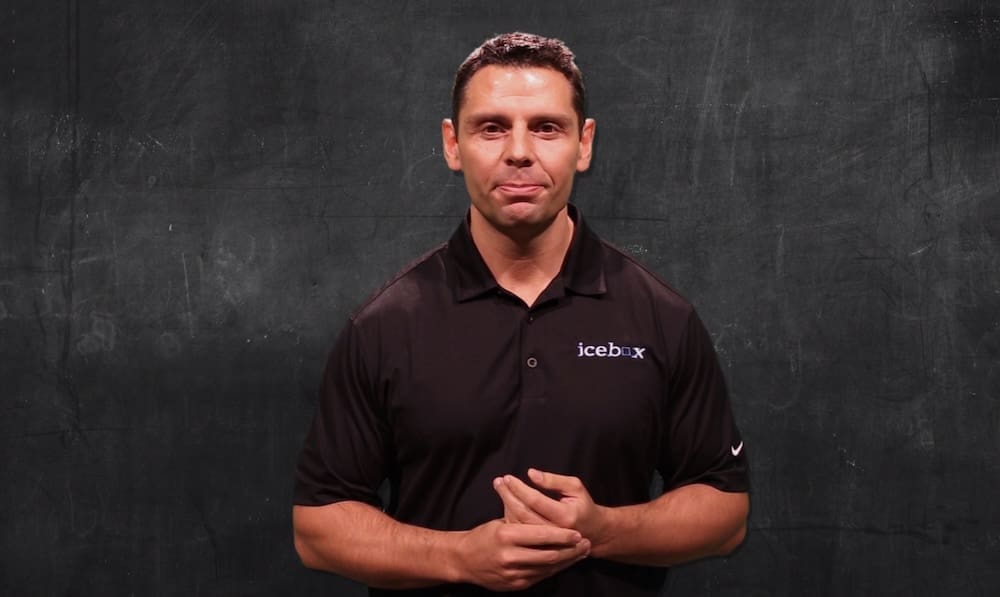
Behind that transformation is Dr. Spencer Wood, a performance psychologist based in Peachtree City who has spent more than two decades guiding athletes and teams through the crucible of competition. His client list stretches from Olympic programs to Major League Baseball to the NBA. Yet Wood is quick to point out that the tools he teaches aren’t reserved for champions. They are for anyone who has ever felt the weight of expectations, the sting of mistakes, or the paralyzing grip of pressure.
From injury to insight
Dr. Wood’s journey into performance psychology began not with a textbook, but with a devastating injury. As a young basketball player, he suffered what doctors called an avulsion fracture—an injury so severe that part of the bone was torn away along with the ligament. It ended his aspirations of playing professionally.
But the setback only sharpened his interest in what had already captured his imagination: the mental side of performance.
“I always thought I would gravitate to this career,” Wood recalled. “Even before the injury, I was fascinated by how the mind shapes excellence.”
As a college student, he gave a guest lecture on sports psychology, filling an hour with insights he had picked up from books and articles. The experience left him exhilarated. “I thought, I may have actually helped one or two of my classmates who were struggling. That solidified it for me—I was going to spend my life doing this.”
Wood went on to earn five degrees, including a Ph.D. in psychology with a research emphasis in sports psychology. By the early 2000s, he was already working with teams, and in the two decades since, his reputation has quietly grown. Today, he works with athletes from every Power Five collegiate conference, with MLB and NBA franchises, and with Olympians who carry entire nations’ hopes on their shoulders.
The science of bouncing back
One of Wood’s favorite teachings is what he calls the “three Fs”: flush a mistake, fix a mistake, forget a mistake.
It sounds simple, but it’s a skill that many athletes—and many ordinary people—lack. Mistakes, Wood explains, aren’t just about outcomes. They become tangled up with identity.
“Very often athletes don’t just lose a game,” he said. “They label themselves as chokers. That label is far more devastating than the loss itself.”
Wood tells athletes that clutch performance isn’t always about the highlight reel moment that goes right. It’s about executing the right process under pressure—whether or not the outcome is favorable. A pitcher can throw the perfect pitch, he said, and still watch it sail out of the park if the batter has the swing of his life. “That doesn’t mean the pitcher choked. It means the batter had a great at-bat. Clutch isn’t defined by outcome.”
By reframing mistakes and outcomes this way, Wood helps athletes build what he calls “bounce-back mechanisms.” Instead of spiraling into self-doubt, they learn to reset quickly.
Pressure, redefined
Ask Wood to define pressure, and he doesn’t talk about screaming fans or championship trophies. He talks about ratios.
“Pressure always grows in the gaps between expectations and confidence,” he explained. “If expectations feel higher than your confidence to meet them, you will have a threat response in your mind. And the body follows with fight, flight, or freeze.”
For athletes, that physiological shift can be devastating—sapping decision-making and fine motor skills at the very moment they are most needed. For non-athletes, the symptoms are just as real: shaky hands in a presentation, a mind gone blank in an exam, or a surge of anxiety before a tough conversation.
The antidote, Wood insists, is training. “Great performers aren’t perfect,” he said. “They’re great because they have almost perfect reactions to their mistakes.”
Lessons from the field
Scott Fletcher, a former Major League Baseball player and coach, saw the results firsthand. As a hitting coordinator for the Detroit Tigers, Fletcher worked alongside Wood and observed how his sessions shifted players’ mental approach.
“Spencer brings clarity on how to adjust thinking patterns,” Fletcher said. “Athletes deal with doubts, fears, anxieties, and he teaches them how to reverse those thoughts so performance improves.”
What impressed Fletcher most was Wood’s ability to connect. In a room full of young players, Wood could illustrate how even the best athletes battle unhelpful thoughts—and how to flip those thoughts in real time. “He gave examples that were relatable, and you could see the guys’ eyes light up,” Fletcher said.
It wasn’t just professionals who benefited. Fletcher recalled asking Wood to spend a few minutes with his wife, a recreational tennis player. “She walked away saying, ‘That really helped a lot.’ His methods don’t just work for pros—they work for anybody.”
The Olympian’s testimony
For Ryan Held, the tools were lifesaving. After failing to make the 2021 Olympic team, he was left gutted. “I would’ve spiraled and wasted energy on things that didn’t matter,” he admitted.
Held describes Wood’s most powerful exercise as learning to separate irrational fears from rational truths. “Filtering those saved me so much emotional energy,” he said. “I became more resilient. A bad swim wouldn’t throw me off anymore. I could come back to center faster.”
That steadiness carried him through trials and ultimately onto the relay team that struck gold in Paris. Looking back, he doesn’t just see two medals—he sees two very different kinds of victories. The first marked the peak of his physical gifts; the second marked his ability to rise above doubt and disappointment. Paris was less about muscle and speed and more about resilience—proving to himself that the setback of 2021 would not define his career. “Getting back, stepping into that arena again, and overcoming that mountain of doubt—that’s what I’m most proud of.” he said.
Why it matters now
Wood is deeply aware that mental health still carries stigma, especially in the world of sports. “If an athlete limps into the training room with a torn ligament, nobody blinks when he sees a doctor,” Wood said. “But if that same athlete admits he’s anxious or struggling with confidence, suddenly there’s hesitation. It shouldn’t be that way.”
He points to public figures like Simone Biles, Michael Phelps, and Kevin Love who have openly shared their struggles as a way of normalizing the conversation. “If the best of the best—the Olympians, the All-Stars, the champions—seek help for their mental game, shouldn’t the rest of us feel free to do the same?”
This is why Wood prefers the term “performance psychology” to “sports psychology.” The goal is to help anyone perform under pressure—whether that’s an athlete on the field, a surgeon in the operating room, or a parent navigating the pressures of daily life.
The universal takeaway
Wood’s brilliance lies not just in helping athletes win medals, but in distilling universal truths about the human mind. Pressure, he teaches, is inevitable. Mistakes are unavoidable. The question is how we respond.
“Being in the zone is often less about what you add to the mind and more about what you take out,” he said.
That idea resonates far beyond sports. Who hasn’t replayed a mistake at work, or labeled themselves harshly after a failure? Who hasn’t felt the suffocating weight of perfectionism, or the jittery nerves before a moment that mattered?
Wood’s methods remind us that resilience is trainable. That mistakes don’t define us. That confidence can be built. And that even in life’s most pressurized arenas, we can teach our minds to be allies instead of saboteurs.
The last word
When Ryan Held looks back on his career, he sees two medals. One gleams with physical accomplishment. The other shines with something deeper—a triumph of the mind.
“I know I wouldn’t have made it without Dr. Wood,” Held said simply.
And that is perhaps the greatest lesson: that the mind is not a mystery to be feared, but a muscle to be trained. That greatness, whether in sport or in life, isn’t about being flawless—it’s about learning how to recover.
Because in the end, whether you’re diving into the Olympic pool, standing on a pitcher’s mound, or simply standing in line at the grocery store, the real game is always in the mind.




Leave a Comment
You must be logged in to post a comment.