


 1572
1572 0
0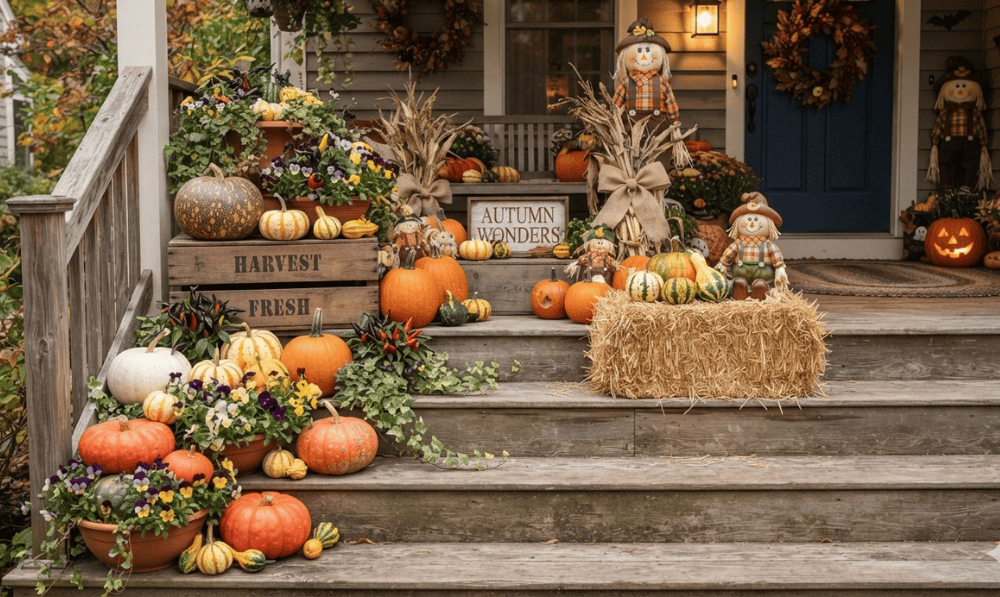
Even though temperatures are still in the 90s, we can feel a hint of fall on the horizon. School is in session, and college football is back in all its glory (Go Dawgs!)
It’s time to transition your outdoor entry into a cozy and welcoming autumn vibe. Nothing says fall quite like a porch adorned with pumpkins. While the classic round orange carving pumpkin will always hold a special place in our hearts, the world of cucurbits (members of the gourd family) has expanded dramatically. Today, growing and decorating with unique heirloom varieties allows you to paint your porch with a sophisticated, unexpected palette.
To create a stunning outdoor display, look beyond orange to a spectrum of cultivars that offer dramatic color and texture contrasts:
- White: For a clean, modern aesthetic, seek out the medium-sized ‘Casper’ or the miniature, ghost-like ‘Baby Boo’.
- Blue and Green: Check out the heirloom winter squash from Australia, the deeply ribbed, slate-blue ‘Jarrahdale’ or the ‘Queensland Blue’ to add cool, sophisticated undertones to your design.
- Red and Pink: ‘Cinderella’ (Rouge Vif d’Etampes) features a rich, glowing scarlet-orange skin, while the peanut-shelled ‘Galeux d’Eysines’ offers a unique warted texture in pale pink. It’s one of my favorites!
- Muted Sage: The Italian ‘Marina di Chioggia’ provides a dark, bumpy, sea-green look that pairs perfectly with deep red chrysanthemums.
Fascinating Facts about Pumpkins: Here are a few fun conversation starters for your visitors.
- Pumpkins are technically a fruit—specifically a giant berry known as a pepo. Most parts of the fruit are completely edible, (except the dry woody stem), from the skin and flesh to the seeds, flowers, and leaves.
- The original jack-o’-lanterns weren’t pumpkins; the tradition originated in Ireland, where people carved menacing faces into turnips, beets, and potatoes to ward off evil spirits. When Irish immigrants arrived in America, they discovered that pumpkins were much easier to carve!
- Pumpkins are 92% water, making them very similar to watermelons.
- Each pumpkin has about 500 seeds and takes about 90 to 120 days to grow to maturity.
- Native Americans grew pumpkins as part of the “Three Sisters” companion planting method, alongside corn and beans. The large pumpkin leaves shaded the soil to retain moisture and suppress weeds.
- The world record weight for a pumpkin exceeds 2,800 pounds and was grown last year by brothers in the UK.
- Illinois produces more pumpkins than any other state—growing roughly double the amount of the next leading state.
Design Strategies for the Perfect Porch
- When arranging your autumn display, think about vertical layers. Group your colorful cultivars in odd numbers (groups of three or five always look most natural) on your porch steps.
- Elevate some pumpkins on wooden crates, inverted terracotta pots, or rustic hay bales to create visual depth.
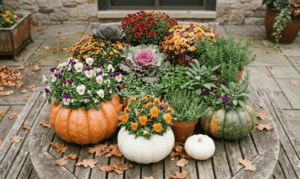
- For an extra touch of seasonal texture, intersperse your gourds with flowering trailing violas, ornamental peppers, and dried corn stalks.
- Add whimsy with scarecrows or Halloween decorations.
The Forest Park Farmers Market, 16 Forest Pkwy in Forest Park, has an amazing array of pumpkin cultivars. Each fall, I visit Hammonds Produce (Sheds 17 and 18) for a fabulous and reasonably-priced selection to liven up my outside spaces.
After the season is over and you are transitioning to Christmas, take your pumpkins and place in your compost bin to decompose and add nutrients to your soil. No compost bin – just bury the pumpkins in a garden bed to decompose. Your soil and plants will thank you!




Leave a Comment
You must be logged in to post a comment.