

 2788
2788 5
5
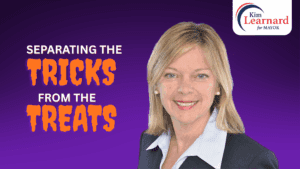
When the Peachtree City Council gathered for its first work session the morning of January 5th, the atmosphere at City Hall reflected both continuity and change. With Mayor Kim Learnard and Councilmember Clint Holland entering their second terms and newcomer Michael Polacek taking his seat for Post 4, the five-member body (rounded out by Laura Johnson and Suzanne Brown) began a new term marked by ambitious priorities and lingering questions about internal dynamics.
To establish a clear benchmark for measuring the council’s performance in 2026, I asked each member the same set of questions about their goals, their approach to collaboration, and their commitment to public trust. Whether the council can navigate past tensions while delivering on those priorities will determine the success of the year ahead. This article summarizes where each member plans to focus and how they intend to work together.
Council’s Goals for 2026
The council’s priorities for 2026 fall into several broad categories with some overlap and some notable divergence. What follows is where each member plans to focus their energy this year.
Restricting Density
Councilmember Brown defines her primary goal as “maintaining the overall character of Peachtree City” by resisting pressure to urbanize. Her central objective is to remove medium and high density residential zoning classifications from the municipal code, specifically apartments, condominiums, townhouses, and mixed-use housing.
Brown plans to use the current 180-day moratorium to work with the Planning Commission to finalize these changes and integrate them into the 2027 Comprehensive Plan. “Changing the residential zoning classifications to remove ‘multi-family’ medium or high density housing options must first be addressed by the Planning Commission and then City Council,” she wrote. “Success will be accomplished when the city council approves those residential zoning classifications to remove medium and high density classifications.”
Annexation for Economic Development
Annexation emerges as a key strategic tool for the council in 2026 though members remain cautious about its implementation and long-term effects.
Councilmember Holland proposes a study on annexation to assist larger businesses in finding appropriate parcels of land within city limits. He argues that strategic growth in this sector is a win for residents. “More taxes from the industrial sector of our city can translate to lower taxes for the homeowners in PTC,” he writes. Holland’s approach focuses on identifying available land that can accommodate larger businesses.
Councilmember Brown also acknowledges the need to annex more land for industrial growth but expresses concern over the logistical and social costs. She specifically questions how the city can expand without encroaching on existing neighborhoods. “Which direction we go, and how we do it to minimize annexation of existing residential property is a problem,” she writes. Brown notes that she plans to approach any annexation proposal analytically to determine its impact decades into the future, admitting that the process “will not be easy.”
Transportation and Connectivity
Multiple council members prioritize the city’s physical connectivity and focus on clearing the backlog of long-standing projects.
One of Councilmember Holland’s top priorities is addressing the city’s most notorious traffic bottleneck by initiating a Georgia Department of Transportation (GDOT) engineering scoping study for a potential overpass at the SR 54/74 intersection. While the ongoing Displaced Left Turn (DLT) project is slated for completion by mid-2026, Holland remains skeptical of its long-term impact on east-west travel. He noted that while the DLT may improve flow on SR 74, he believes it will do little to alleviate the congestion on SR 54.
Regarding the path system, Holland seeks to complete several segments that have remained in the planning stages since 2017. These priority routes include Carriage Lane to Publix, North Hill, and Walt Banks to North Peachtree Parkway, along with the path extending past the Peachtree East shopping center. He also places a high priority on the bridge connecting the north and south sides of SR 54. Holland argues this bridge is essential for safety because it keeps carts, bikes, and pedestrians off the state highway while providing a direct connection between Booth Middle School and McIntosh High School.
Fiscal Policy and Cash Reserves
The council’s ability to fund these improvements depends on a looming debate over the city’s financial strategy. Councilmember Polacek’s top priority involves finding consensus on the state of the city’s cash reserve. “We are well over the minimum amount of where we need to be in order to maintain a strong AAA bond rating, while also remaining prepared for a ‘rainy day,'” Polacek wrote. He believes that using reserves to lower long-term maintenance costs will eventually provide the city with a cushion for property tax relief.
Councilmember Brown approaches fiscal policy from a more immediate angle, emphasizing direct tax relief. She has consistently advocated for rolling back the millage rate, arguing that excess revenue should be returned to taxpayers as quickly as possible.
While both Polacek and Brown express a desire to reduce the tax burden, their methods diverge: Polacek focuses on strategic investment to lower future costs, while Brown advocates for immediate reductions in the tax rate itself. This difference in philosophy could define the council’s major budgetary discussions throughout 2026.
Recreation and Quality of Life
Specific facility improvements are high on the agenda for multiple members with recreation infrastructure emerging as both a priority and a potential fiscal challenge.
Councilmember Holland wants a plan in place for a new hockey structure at Kedron featuring two rinks to allow more children to use the facility. “Come on,” Holland wrote, “the kids need a place to play hockey in PTC. This will allow more children to use the double-sized facility. If we did it for pickleball players then we need to do it for hockey players, too!”
Councilmember Polacek is focused on advancing SPLOST-funded projects, specifically mentioning the need for bathrooms at Drake Field. “I think everyone I’ve spoken to is eager for the bathrooms at Drake Field,” he wrote. Mayor Learnard also identified funding sources for recreation facilities and the installation of restrooms at Battery Way Park as key topics for the year. Additionally, she noted that managing micromobility vehicles such as electric scooters and bikes will require attention as these devices have become more prevalent on the city’s extensive multi-use path system, raising questions about safety, path etiquette, and whether additional regulations are necessary.
Leadership and Governance
Mayor Learnard defines her primary goal for 2026 as “convening a trusting, cohesive leadership team.” She believes a focus on unity and professionalism is necessary to make the best decisions for citizens. “City Council leadership will be at our best, and we will make the best possible decisions on behalf of our citizens, when we reach that goal,” she wrote. “We did not achieve that in 2025.”
In a related vein, Councilmember Brown highlights her successful push to increase public comment time from two to three minutes and notes her intent to advocate for making it even longer.
Youth Engagement
Councilmember Johnson is focused on forming a Youth Council to involve teenagers in city government. During a recent law class she taught at McIntosh High School, she asked students how they felt they were viewed by the citizens of Peachtree City. “There was not a single positive comment,” Johnson said. “We’re rowdy, we’re loud, we’re obnoxious, all of the things that people say. And it was very disheartening.”
Johnson’s goal is to have youth participants weigh in on issues that pertain to them, such as golf cart path safety, and participate in volunteer opportunities or other city groups like the Recreation Advisory Board. She believes involving teenagers in finding solutions will help residents see that demographic in a more positive light. The council appears supportive of the initiative, and funding is already budgeted for youth council activities.
Environmental and Aesthetic Issues
The council expects to address several quality-of-life and aesthetic issues in the coming year, ranging from property rights to routine maintenance. Councilmember Brown has identified the city’s “burn ban” as a priority for 2026, noting that she brought the issue back to the council after hearing from residents who own lots of an acre or more. The council plans to explore potential revisions to the ban during their annual retreat at the end of January.
Additionally, the council will oversee several maintenance and beautification projects. The January 5th agenda included near-term work such as the grinding and removal of organic matter at the recycling center and a contract for painting the library.
Public Safety
The city has made concrete progress on public safety infrastructure heading into 2026, addressing facility needs that have been identified through multiple budget cycles.
Councilmember Brown noted that the city has already acquired properties needed for public safety staff, training, and an Emergency Command Center. These acquisitions represent a significant milestone in the city’s long-term capital planning, providing the physical foundation for enhanced emergency services operations.
The Emergency Command Center is particularly notable as a strategic investment in the city’s ability to coordinate responses during major incidents, natural disasters, or regional emergencies. The dedicated training facilities will allow the city to maintain and improve the skills of public safety personnel without relying on external or shared resources, enhancing response readiness.
Waste Management
Councilmember Holland intends to bring the issue of trash collection to the council, noting that having up to six trash vehicles on a street every week is not sustainable for the street structures. He hopes fewer trash haulers will mean “less trash truck noise, longer life of the city street, and fixed prices on trash haulers for our residents.”
Mayor Learnard also lists trash collection and yard debris pickup as potentially controversial topics the council will likely face in 2026.
Council Dynamics and Working Relationships
The council members offer varying perspectives on past tensions, their strategies for improvement, and how they’ll work together in 2026. These internal dynamics will shape whether the council can function effectively.
Diagnosing and Addressing Past Tensions
Councilmember Polacek, the council’s newest member, cannot speak to what caused previous strain but notes he has had pleasant discussions with each member since the election. Mayor Learnard acknowledges the council did not achieve a cohesive leadership team in 2025 and emphasizes the need to shift toward unity. “Now, with the November election behind us and a new Council in place, we can and must shift our focus to cultivating a strong sense of unity and professionalism,” she wrote.
Councilmember Johnson attributes past contention to members holding grudges and individuals feeling “quieted” or treated like children. “Whenever someone feels like they’re being quieted, it’s never going to be taken well,” Johnson said. “If you’re telling someone that [they] can’t do [something], it’s usually not a good thing. It’s usually how you would treat a child. And no one wants to be treated as a child.”
Councilmember Brown points to management styles, political beliefs, and the personality of a former City Manager as contributing factors. She notes she has experienced “criticism and badgering” both on and off the dais. “I don’t intend to abandon my core beliefs and principles,” Brown wrote. “Does that impact working relationships? Yes, it does.”
Councilmember Holland suggests that controversies could have been mitigated if each member were allowed to have their own key project added to the city’s prioritization list. “Working together as a full council is key to a successful environment of cooperation, productivity, respect, civility, and listening to the other council members’ needs, thus minimizing special interests that don’t include all Peachtree City residents,” he wrote.
Individual Strategies for Improvement
Councilmember Polacek intends to avoid “divisive noise” and focus on community values, emphasizing professionalism and pragmatism in his approach to council service. “I’m proud to have run an independent campaign, driven by community values, and focused on the local issues that matter,” he wrote. “It’s how I plan to serve during my time on council and how I plan to work alongside my peers on council.”
Councilmember Holland plans to communicate directly with all members, even those who may not support a specific topic, and focus on negotiation and compromise. He believes that working through difficult topics leads to “multiple agreements on the various topics/projects, then the real winners are the residents.”
Councilmember Johnson emphasizes treating every official with respect because they were elected by the citizens. “Everybody on this council, because you are an elected official [and] you are put here by the citizens…you deserve respect.” She also believes in empowering members by allowing them to place items on the agenda, even if it creates a burden of responsibility for them to provide thorough presentations. Johnson cited Councilmember Brown’s recent request to revisit the burn ban as an example. “I wish I’d had this presentation beforehand,” Johnson said of Brown’s presentation, noting that staff would have been better prepared if they had initiated the agenda item. “What I love is [that] anyone can put it on there, and then the burden is on them.”
Councilmember Brown maintains that disagreements on the dais are not “unnecessary conflict” but rather differences of opinion, and she does not intend to abandon her core principles to improve relationships. “If any disagreement about an issue is aired on the dais, are you implying it’s unnecessary conflict?” she wrote. “Because I don’t view it as such. I view it as a difference of opinion.”
The City of Civility Pledge
The council remains split on the Georgia Municipal Association’s “City of Civility” pledge, echoing a debate that unfolded at a March 2025 council meeting when the designation last came up for renewal. At that meeting, Councilmember Brown argued the pledge “means nothing” and “achieves nothing,” while Councilmember Johnson countered that “even if it’s just symbolic, it’s important.” The council at the time indicated the 2026 elected council would address the renewal.
Mayor Learnard continues to wholeheartedly endorse the pledge, quoting the GMA resolution about how civility “promotes thoughtful debate and discussion of legislative issues, resulting in better public policy and a more informed electorate.” Polacek also supports it, calling signing the pledge “the adult thing to do.” Holland plans to sign as he has in the past, noting that “civility starts with ‘mutual’ respect and that leads to help build better relations among the council members.”
Holland further suggests the council should sign a “City of Ethics” pledge to remain on record with Georgia state laws and GMA ethics standards, noting the renewal is coming up either in 2026 or 2027.
Brown maintains her position that the pledge is “less than symbolic…it is meaningless.” She notes that past councils signed it but still “attacked each other on numerous occasions. The pledge on the paper didn’t stop it.” She argues accomplishments can happen without formal pledges, pointing to the mayor’s upcoming State of the City address. “All of the accomplishments the mayor will outline were done without a ‘City of Civility’ pledge being signed,” Brown wrote.
Johnson supports the pledge but continues to express doubts about whether it actually changes behavior. “Of course, I would be for it,” she said. “Do I think it would make a difference if we’re a city of civility? I don’t know.” She found it “embarrassing” that such a pledge listing objectives like “don’t take it personally” was even necessary for elected officials.
Relationship with City Staff
The council agrees on maintaining professional boundaries with city staff, though they describe those boundaries differently.
Mayor Learnard and Councilmember Johnson both emphasize following the chain of command and respecting the City Manager’s role. Learnard expresses pride in City Manager Justin Strickland, noting that “our city staff is second to none” and suggesting the council should “follow their example in building an effective team and working together in good faith.” Johnson describes an effective relationship as maintaining proper boundaries and ensuring all questions for department heads go through the City Manager rather than direct contact.
Councilmember Polacek, drawing on his experience as a former legislative staffer, approaches the council-staff relationship through the lens of process and information quality. He emphasizes that respect for city staff extends beyond interpersonal dynamics to how council members utilize the information staff provides. “I believe respect and effective communication goes a long way,” he wrote. “And respect does not always have to apply to interpersonal relationships, but also applies to how I interpret information. I plan to inform my decisions based on data and facts through an objective lens, and not a political one.”
Councilmember Brown offers a more structural view, noting that under the City Charter, staff work for the City Manager, who works for the Council. This creates “a bit of a divide between us and city staff because it minimizes our interactions with them,” she wrote. She observes that staff may have their own departmental agendas and may not always like council decisions. “City Council gets paid ‘the little bucks’ to make ‘the big decisions’ about what is best for all of our citizens,” Brown wrote.
Holland highlights the City Manager’s weekly updates as a key communication tool that keeps everyone informed of progress on projects and council priorities.
Public Accountability and Engagement
Beyond internal dynamics, the council members have outlined how they’ll stay connected to residents and provided specific metrics for judging their performance.
Resident Engagement and Accessibility
Each member has outlined a different strategy for maintaining a connection with the public outside of formal city meetings. These approaches reflect both personal style and the broader question of how accessible elected officials should be.
Holland plans to continue his three-year practice of attending the Farmers Market one Saturday each month to speak with residents on any topic of their choice. He also plans to attend as many local events as possible to interact with city residents and listen to their concerns.
Brown notes that she is frequently stopped by citizens while shopping at the local Kroger on Crosstown and takes the time to answer questions. “If you see me, and have an issue, please talk to me,” she wrote. She also reads posts on social media platforms like Facebook and NextDoor, occasionally clarifying incorrect information. Brown remains active in the Fayette County Republican Party and the Greater Fayette Republican Women’s Club, where she regularly explains council decisions.
Mayor Learnard participates in dozens of monthly meetings with civic organizations, non-profits, school groups, and scout troops. She also highlights the city’s digital reach, noting that e-newsletters and social media followers now exceed 50,000. “The word is out,” she wrote. “We are keeping our citizens informed and we’re receiving feedback, input, and public participation like never before.”
Johnson emphasizes the value of naturally engaging with residents at community functions such as visiting the splash pad to ask parents how the facility affects their lives. “A lot of your good conversations that you have with your citizens are when you’re just naturally out in the community and at functions, and when you can engage with them in unofficial ways,” she said. “That’s where I really get a lot of my feel for what’s going on in the community and what people are thinking.”
Polacek intends to fulfill a key platform promise by hosting town hall meetings once he becomes more acclimated to his new role. He views these forums as a vital way to maintain consistency between his time as a candidate and his service as an official. “Once I find all the light switches in this city,” he wrote, “I look forward to hosting one later in 2026, and consistently thereafter.”
Defining and Measuring Success
The council members have provided specific metrics by which they believe residents should judge their performance at the end of 2026.
Polacek expects voters to assess whether he delivered on campaign promises while maintaining the values-based leadership he championed during his election. “I judge my elected officials on two things,” he wrote. “Did they achieve anything they campaigned on? Was their approach to leadership grounded in the values they committed themselves to, or was it all talk? My goal is that voters will be able to easily answer ‘Yes’ to both of these questions within my first twelve months of service.”
Holland points to tangible outcomes such as the engineering study for the SR 54/74 intersection, the completion of multi-use paths, and the progress of the new hockey facility. “From the above list of projects for the city they can point to the following,” he wrote, listing more available land for larger businesses, completed multi-use paths, a new hockey structure and rinks, fewer trash haulers on city streets, and the engineering scoping study well underway by year end.
Brown ties her effectiveness directly to the removal of specific housing categories from the municipal code. She argues that her performance should be judged by whether the council votes to eliminate multi-family options such as apartments and townhouses. “Success will be accomplished when the city council approves those residential zoning classifications to remove medium and high density classifications,” she wrote. She views this specific achievement as a fundamental test of integrity, asking, “When an elected official tells you what they plan to do, and then does it…doesn’t that mean you should trust them?”
Johnson believes her success will be measured by the formal formation of the Youth Council and seeing its members actively volunteering at city functions. “I think they’ll see the involvement,” she said. “You’ll probably see, with some of the volunteer opportunities, each person on the youth council doing volunteer hours for the city. So it might be where you go to functions and you actually see them, because they’re volunteering for the city and helping out.”
What This Means For 2026
The collective vision for the year ahead indicates that Peachtree City is entering a season of heavy lifting. While the council members brought individual wish lists to the table, the defining narrative of 2026 will be the council’s ability to balance a massive workload with the internal challenge of building a unified leadership team.
The most immediate area of alignment is a commitment to the city’s physical bones. There is a clear mandate to modernize aging facilities and complete the connectivity projects that have lived on planning maps for years. From multi-use paths to intersection studies, the council is signaling that 2026 is the year to move from discussion to execution. However, this push for progress brings a looming fiscal debate regarding the use of cash reserves and the long-term protection of the city’s AAA bond rating.
Beyond the concrete and asphalt, the council remains at a philosophical crossroads regarding the city’s identity. The divide over residential zoning and industrial annexation suggests a fundamental debate over how much (and how fast) Peachtree City should evolve. This tension is mirrored in the council’s internal culture. The split over formal civility pledges reveals a body still searching for a shared language of collaboration. Whether they view these pledges as essential standards or empty gestures, the question remains whether adult behavior and common sense can prevail over the friction of the past.
Ultimately, these responses create a vital baseline for accountability. By going on the record with their priorities and their philosophies on leadership, the members have provided a clear scorecard for the community. The success of 2026 will not be measured solely by shovels in the ground, but by the council’s ability to navigate their differences in good faith to deliver on the promises made to the citizens.


Leave a Comment
You must be logged in to post a comment.