


 4004
4004 2
2
A Fayetteville-based autism therapy provider says it has been forced to pause services for some children after Amerigroup, a managed care organization that administers Georgia Medicaid benefits for low-income families, stopped reimbursing claims — a move the clinic says threatens care for foster children and other Medicaid-insured families.
“Abruptly stopping payment on medically necessary services has forced me into an impossible position,” Jessie Johnson, owner of BlueAsh Behavior, wrote in a statement sent to media. “I must tell my most vulnerable families, the week before Christmas, that they’re losing their most essential resource.”
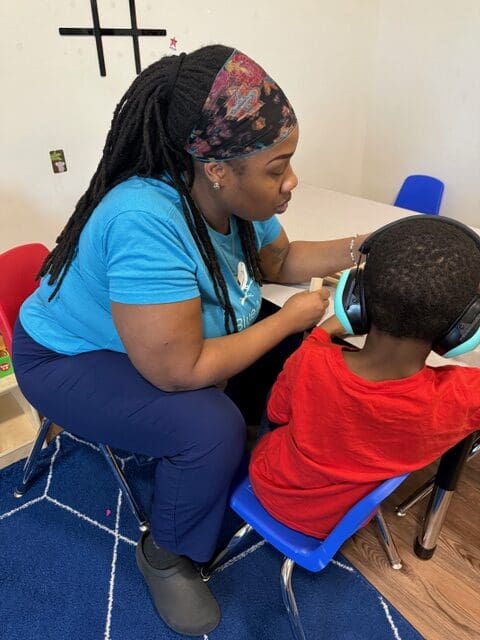
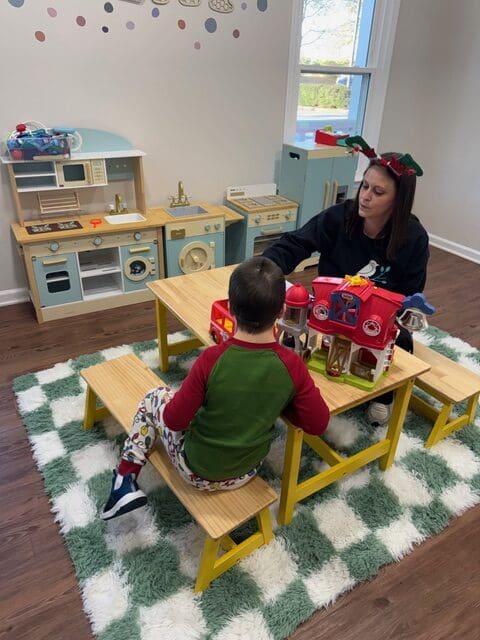
Johnson opened BlueAsh Behavior in August 2024, and the clinician-owned practice has since grown to serve more than 60 families with a staff of more than 50 therapists, providing Applied Behavior Analysis (ABA) therapy in homes, schools, and at its downtown Fayetteville clinic. About a quarter of Blue Ash’s current clients — and a majority of its waiting list — rely on Amerigroup coverage, she said.
A provider forced to pause care
Johnson said Amerigroup had been paying BlueAsh’s claims consistently until last month, when reimbursements abruptly stopped.
“Last month Amerigroup abruptly stopped processing any of our treatment claims citing ‘BlueAsh Behavior is not a credentialed Medicaid provider,’” Johnson wrote. “This is inaccurate and sounds easy enough to disprove.”
Johnson said BlueAsh was fully credentialed with Georgia Medicaid and its third-party managed care organizations before opening. She noted that Georgia Medicaid itself continues to reimburse BlueAsh directly for children who are covered under straight Medicaid plans.
“Medicaid itself is still paying our claims,” Johnson said. “If we were not credentialed with Georgia Medicaid, that would not be possible.”
According to Johnson, Amerigroup representatives have offered shifting explanations for the halted payments — first asserting BlueAsh was not credentialed, then later suggesting the issue was a clerical or system error within Amerigroup’s claims-processing system.
“We’ve been told we’re not credentialed, that it’s a provider relations issue, and that it’s a clerical error,” Johnson said. “But the claims still aren’t being paid.”
BlueAsh continued providing services while attempting to resolve the issue, paying therapists out of operating funds and, eventually, Johnson’s personal savings.
“Amerigroup cutting off a quarter of our monthly revenue over an issue that should be easy enough to resolve, has decimated us,” Johnson wrote.
What ABA therapy provides
ABA therapy is an evidence-based, medically prescribed treatment for children with autism that focuses on communication, social skills, adaptive living skills, and reducing unsafe or disruptive behaviors. Therapy can involve up to 40 hours per week and may take place in clinics, schools, or homes.
Johnson said consistency is critical, particularly for young children and those with higher support needs.
“These are kids who need explicit instruction to learn skills that other children pick up naturally,” she said. “Interruptions can cause real regression.”
A family’s progress — and the risk of losing it
For Fayetteville mother Nia Alford, ABA therapy at BlueAsh transformed daily life for her two sons, ages 8 and 4, both of whom are on the autism spectrum and insured through Amerigroup Medicaid.
Before finding BlueAsh, Alford said she contacted multiple ABA providers across the area and encountered long waiting lists, some stretching six months to a year. She said BlueAsh had recently opened and was the only practice with openings.
Speaking about her younger son, Alford said, “He actually was nonverbal when he first started the program. He wasn’t sleeping at night, meltdowns every day, eloping.”
Her older son struggled significantly before therapy began.
“He couldn’t really deal with crowds,” Alford said. “He couldn’t deal with people singing, different noises.”
Alford said ABA therapy made it possible for her older son to remain in school.
“He wouldn’t have even been able to stay in the school system without his therapist there with him full time,” she said.
She said therapists also worked closely with the family to build skills at home.
“We’re able to redirect him because they showed us different techniques to help him cope and deal with not having things that he wants,” Alford said. “He sleeps through the night now. So just, all around, it has allowed us to have a better home life.”
Sudden disruption, little communication
Alford said she learned services would be paused starting December 29 only after BlueAsh notified her that claims were not being reimbursed.
“They haven’t even sent anything to me at home saying, ‘Hey, these claims are denied,’” Alford said. “I haven’t gotten that at all.”
She said she never received an explanation of benefits, commonly known as an EOB, from Amerigroup indicating the claims had been denied.
When Alford contacted Amerigroup directly, she said she was told the issue was between the insurer and the clinic.
“They basically said, well, there’s nothing wrong that you’re doing,” Alford said. “It’s something wrong on the ABA company’s part.”
With four children at home, Alford said the loss of therapy creates immediate challenges.
“They don’t need TV all day. They can’t watch YouTube. They need those inputs,” she said. “Now it’s like, how do I make sure everybody’s getting their needs met when the bandwidth is definitely shrinking.”
A broader concern among providers
Johnson said BlueAsh’s experience does not appear to be isolated. After consulting an attorney, she said she learned multiple ABA providers are reporting similar problems with Amerigroup.
“When I hired a lawyer, they told me I was the sixth ABA company to call them that week about Amerigroup,” Johnson said.
Johnson also pointed to broader uncertainty surrounding Georgia Medicaid’s managed care contracts. Amerigroup lost its bid in the most recent round of state Medicaid contract awards and is slated to be replaced by other insurers beginning in 2026, pending the outcome of ongoing protests and administrative proceedings.
“There’s a lot of instability right now,” Johnson said. “And it raises real questions about whether these claims are being treated with urgency.”
In her written statement, Johnson used stronger language to describe the impact she says the payment halt has had on families and providers.
“Amerigroup has forced me into a position where I must tell my most vulnerable families, the week before Christmas, that they’re losing their most essential resource,” she wrote. “They are losing the therapist that has become like family to them, often the reason they can attend school at all.”
She added, “Amerigroup’s actions are nothing short of criminal and cruel. Not a single one of their excuses is sufficient enough to cover the damage they’ve caused.”
What comes next
Johnson said she has contacted Georgia Medicaid officials and state legislators seeking intervention and resolution. She said therapy will resume as soon as Amerigroup begins reimbursing claims again.
Late Monday evening just before publishing, Amerigroup sent in the following statement to The Citizen, “A small number of ABA claims for BlueAsh Behavior Solutions were affected by a processing issue, and we are working directly with the provider to correct them. This does not reflect a broader issue with ABA provider reimbursement.”
For parents like Alford, a “small number of claims” represents significant services for two out of her four children, and the uncertainty is overwhelming.
“These services changed our home,” she said. “I’m just hoping it gets fixed before my kids lose the progress they worked so hard for.”



Leave a Comment
You must be logged in to post a comment.