


 2247
2247 0
0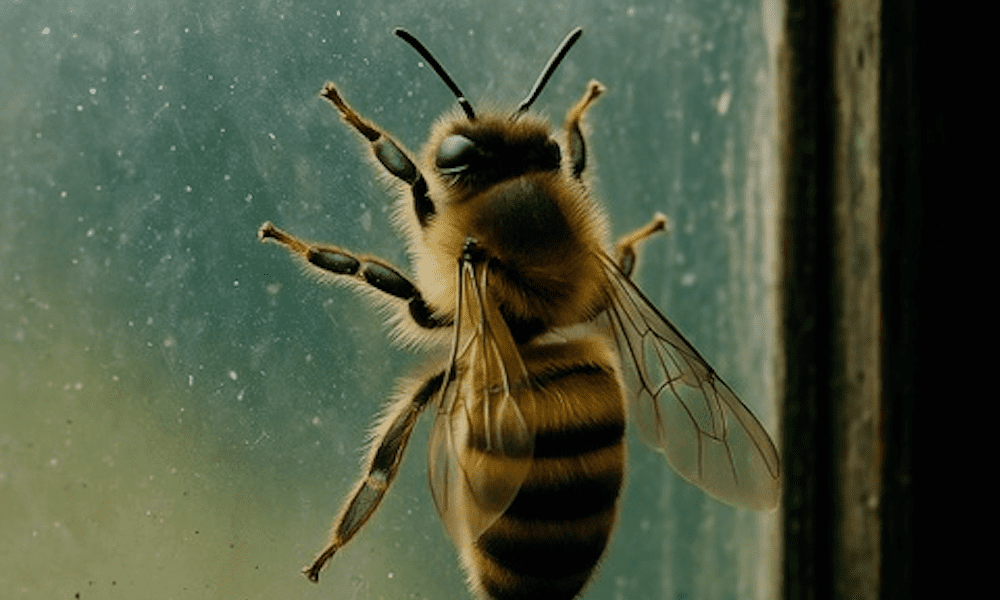
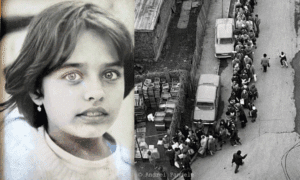
In Communist Romania, the regime taught us who the villains were: the “Gypsies,” the corrupt Westerners, the dissenters, the inconvenient souls who did not bend easily enough. Every authoritarian story begins with the same poisonous ink, draw a circle around “us,” cast “them” into the shadows, and convince the public that cruelty is simply maintenance of order. Once a society accepts that lie, even the smallest heart can become capable of unthinkable things.
But inside my home, another narrative lived. My grandparents fed anyone who knocked after dark, despite the risk, strangers with hollow eyes, neighbors who might have fallen out of favor, Roma families treated as though their suffering was an acceptable price for someone else’s comfort. My grandfather prayed with a fierce, trembling honesty, not only for our survival, but for the souls of our oppressors, believing that to lose compassion was to lose the last light inside ourselves.
And then there was the day of the bee. A small moment, but in retrospect, a formative one. It buzzed wildly in our classroom, panicked, and trapped. Children leapt from their seats, swatting books at the air, eager to smash it. I rushed instead to the windows, fumbling at the latches, tears pooling in my eyes as I begged them to wait. My young mind couldn’t name what my heart already understood: if fear could so easily justify the death of that tiny creature, it could justify the suffering of anyone. That is how the diminishing of the value of other beings starts, quietly at first, then with frightening ease.
Now, decades and continents away, I feel that childhood lesson echoing through our own national moment.
We are watching the world fracture into categories of “worthy” and “unworthy” again. Gaza’s children starving and now freezing, some dying of cold in storm-soaked tents, while too many still shrug, unwilling to see their suffering as equal to our own. Congo and Sudan’s children tortured and forgotten. Immigrant children on our own soil held indefinitely, their small bodies learning the architecture of cages before the alphabet. Workers here in Georgia apologizing for their broken English, not knowing I was once the immigrant girl stumbling through the same sounds, their vocabulary mistaken for their value because they’ve been taught to expect disdain.
And beyond our species, devastation spreads quietly: frogs facing an extinction-level collapse, bees dying in alarming numbers as their habitats disappear under pesticides, sixty thousand African penguins starving to death while most of the world never reads past the headline.
Everywhere, the same callous refrain rises: They are not like us. They brought it on themselves. They don’t deserve the same care, the same rights, the same breath. This is not politics. This is spiritual corrosion, the slow, invisible collapse of our collective soul.
And I will be honest: even in me, anger flares. Anger at those who stoked these fires, who opened the gates to cruelty disguised as righteousness. But I refuse, absolutely refuse, to let that anger paint whole swaths of people into monsters. That is how every story turns dark. That is how the world loses its way.
Humanity is not a straight line. It is a web, intricate, tangled, shimmering with connection. We need one another more than we dare admit. And we need the other species who walk and fly and crawl beside us, partners in a shared, fragile ecosystem we treat as disposable until it collapses under our arrogance.
Whenever we place ourselves above others, we shrink into something small and brittle. Whenever we sort people into those whose suffering matters and those whose suffering is “acceptable,” we are not protecting ourselves. We are starving the very thing that makes us human.
We are mirrors of each other, whether we like it or not. So, I implore you, do not let your spark go out. Do not trade compassion for the cheap illusion of certainty. Do not surrender your soul for the false comfort of belonging to the “right” side. Reject the seduction of superiority. Resist the stories that demand no courage from you. Be suspicious of any narrative that requires you to harden your heart in order to feel safe.
Choose the heavier thing. Choose the braver thing. Choose kindness, empathy, curiosity. Choose to widen the circle rather than shrink it. Because no amount of wealth, no fence high enough, no sanitized world free of “others,” will ever protect us from the shame of abandoning our own humanity.
History remembers these moments. But more importantly, we remember them, in the quiet hours when the world has gone still and we are left alone with whatever is left of our soul.
Let us be able to say, with clarity and pride: We did not turn away. We did not forget to care. We remained human in a time that begged us not to.



Leave a Comment
You must be logged in to post a comment.