


 887
887 0
0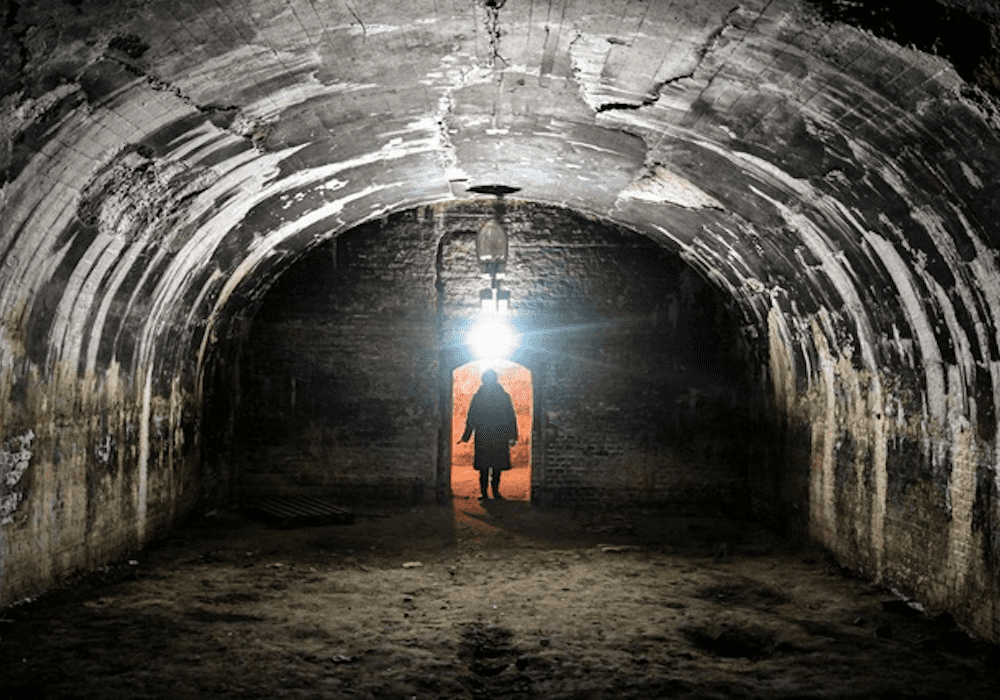
I did not grow up afraid of monsters under the bed; I grew up afraid of certain buildings. Not because of what they looked like, but because of what happened inside them.
In Romania, under Nicolae Ceaușescu communist regime, there were places you did not name out loud. Places like Sighet Prison, a quiet structure in a quiet town where bishops, intellectuals, and those who refused to bend simply disappeared.
My grandfather lived in Sighet. He was Greek Catholic, a faith outlawed by the regime. Its bishops had already been imprisoned; many never returned. He became a priest in hiding. And as a child, I understood something without anyone needing to explain it to me: if they came for him, there would be no trial, no explanation, no goodbye. Just absence.
When my mother was taken in for interrogations, because someone had reported on her and our family was being watched, there were no charges, no lawyer, no timeline. Just questions designed not to uncover truth, but to test obedience. And the kind of fear that sits in your chest and does not move, because you do not know if, or when, or how your mother is coming back.
You learn quickly, in a place like that, that the system is not there to prove guilt. It is there to enforce compliance. And behind it all, always, was the quiet understanding: there are places they can take you.
These places were not always camps surrounded by barbed wire. Sometimes they were prisons, sometimes interrogation centers, sometimes labor sites. And sometimes the system did not need to take you at all, because the fear of those places was enough.
That is how control works when it is fully matured, not loud, not constant, but always present.
Which is why, today, in my adopted country, when people in Georgia hear about large-scale detention facilities, warehouses capable of holding thousands, something in me, something in us, reacts before the facts are even fully formed. It is not hysteria. It is recognition.
In Social Circle, about an hour from Fayette County, the federal government has purchased a roughly one-million-square-foot warehouse for more than $128 million, with plans to convert it into a large immigration detention facility. Public briefings have suggested a capacity that could reach into the thousands, potentially as high as 7,500 to 10,000 detainees, along with thousands of staff.
Local officials have said they were not meaningfully informed before the plan surfaced publicly. The city has raised serious concerns about infrastructure, particularly water and wastewater capacity, estimating that the facility’s demand could exceed what the current system can handle. At one point, the city even took the unusual step of restricting water access at the site until those concerns are addressed.
Residents have gathered. Questions have multiplied. Some answers have been offered, but not enough to quiet the unease. It is that combination of scale, speed, and uncertainty that has people paying attention.
Because history has shown us, again and again, what happens when systems are built faster than the safeguards meant to govern them. When people can be detained without meaningful due process. When oversight lags behind expansion. When entire groups are defined first and evaluated later.
We do not have to look only to distant countries for those lessons. In our own history, Japanese Americans were interned during World War II, not for what they had done, but for who they were. Families were removed, communities disrupted, rights suspended in the name of necessity. It is now widely recognized as a grave injustice. At the time, it was defended as policy.
We tell ourselves: this is different. We tell ourselves: this is necessary. We tell ourselves: this is temporary. History tells us to be careful with those words.
To be clear, Georgia is not communist Romania. But the question is not whether the systems are identical. The question is whether we are asking enough of the system being built.
What are the guardrails? What are the limits? Who is accountable, and to whom? What precedents are we setting?
Because once something is built, once the funding is allocated, the structure established, the process normalized, it rarely remains confined to its original intent. It becomes a tool. And tools, over time, tend to be used.
And it is not abstract. It is not policy on paper. It is people.
It is the neighbor who has lived here for years, raising children, working, contributing, suddenly unsure if they are safe. It is families wondering what happens if someone does not come home. It is children trying to understand why fear has entered conversations that once felt secure.
This is not about fear for the sake of fear. It is about awareness. It is about remembering that the distance between “this could never happen here” and “how did we get here” is often measured in moments when people chose not to ask questions.
I remember what it feels like to grow up in a place where those questions were no longer allowed. Where silence was safer than curiosity, and compliance was mistaken for peace. Where buildings held more than people; they held the consequences of speaking out of turn, believing differently, or simply existing outside the lines drawn by those in power.
We are not there. But the responsibility of a free society is not to wait until we are.
It is to ask, early and clearly: Are we building systems that reflect our values? Are we protecting due process not just in principle, but in practice? Are we ensuring transparency before, not after, decisions are made?
Because the measure of a community is not how it responds when everything feels safe and certain. It is how it responds when something feels off, when instinct says pause, look closer, ask more.
We do not need to agree on every policy. But we should be able to agree on this: every person deserves dignity, and systems of power require scrutiny.
History does not repeat itself in identical forms. It echoes, adapts, reshapes itself to fit the moment. And the question it asks of us, quietly but persistently, is this:
When the signs are still small, when the decisions are still being made, when the buildings are just beginning to take shape, will we be the kind of people who look away, or the kind who choose to look, to question, and to hold the line on what we believe is right?
Because the answer to that question does not just shape policy. It shapes who we become.



Leave a Comment
You must be logged in to post a comment.